Living in Aspen, Colorado
Aspen offers a distinctive mountain-town environment shaped by a compact town core, major cultural institutions, notable design history, and direct access to year-round recreation. For buyers and sellers evaluating Colorado mountain markets, Aspen stands out because it combines a recognizable built environment with civic, cultural, and transportation infrastructure that is unusual for a community of its size.[1][2][3]
A strong Aspen city page should be built around housing stock, architecture, public cultural anchors, recreation access, and transportation systems. That keeps the page locally specific, useful to consumers, and aligned with fair housing principles by focusing on objective place-based features rather than coded resident descriptions.[1][2][4]
Why Aspen Stands Out
Aspen is most accurate and most useful on a brokerage website when described as more than a resort destination. The city’s identity is shaped by the interaction of mountain access, compact town form, arts and culture, and a long-standing design tradition.[1][2][5]
The City of Aspen emphasizes access to transportation, open space, public programs, and community services through its official site and transportation system.[1][2] The Aspen Chamber describes Aspen as a welcoming mountain town whose culture and setting work together to create a recognizable local identity.[3] A lot of Aspen’s in-town movement is designed around transit, biking, and walking rather than driving. The city offers free local shuttles, free bus service to and from the airport, fare-free service to Snowmass Village, and access to the 42 mile Rio Grande Trail.[3] For a real estate audience, those place based factors matter because they describe what actually shapes the market experience: the layout of the town, how people move through it, what public and cultural assets define it, and what kinds of properties exist within that framework.[1][2][3]
Homes in Aspen
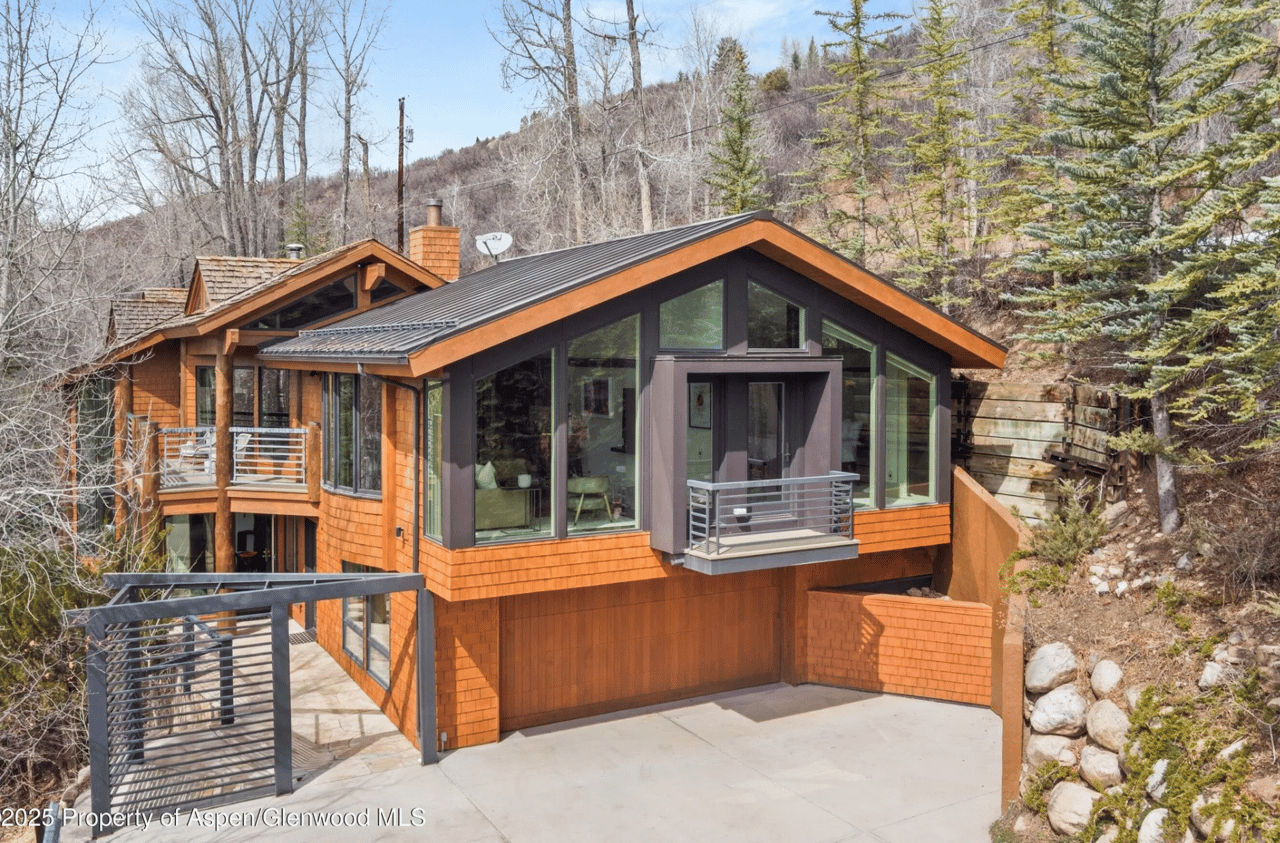
Aspen’s housing stock is best described as a mix of in-town residential properties, attached residences in and near the central core, and larger homes in surrounding residential settings. Because Aspen is compact and topographically constrained, housing is closely tied to location, access, and the physical structure of the town rather than one uniform neighborhood pattern.[1][3]
For brokerage-safe content, the most accurate citywide description is this: Aspen’s housing mix ranges from older in-town properties near the established core to attached residences and larger mountain homes in surrounding residential areas. That framing stays objective and useful without implying who a neighborhood is “for.”
Architecture and Design Character
Aspen’s architectural identity is one of its strongest differentiators. The city’s design story is not limited to preservation alone. Instead, Aspen stands out because historic structures and modern design influence both remain visible in the built environment.[4][5]
A major civic landmark is the Wheeler Opera House, which has been part of Aspen’s arts and cultural scene since it was built in 1889.[4] That date matters because it ties Aspen’s downtown character directly to its late-19th-century roots.
Aspen also has an important modern design legacy through Aspen Meadows Resort, which is rooted in the history of the Aspen Institute and was designed by Herbert Bayer. The resort identifies its setting as a 40-acre campus known for nature-inspired Bauhaus design.[5] For a city page, Herbert Bayer is the clearest design figure whose work should be recognized in Aspen.
That combination — preserved historic landmarks and a verified modernist design legacy — gives Aspen a more layered architectural identity than many mountain communities.[4][5]
Arts, Culture, and Civic Anchors
Aspen has a deep cultural framework supported by year-round institutions. The Wheeler Opera House remains a major arts and performance venue in the center of town.[4] The Aspen Music Festival and School provides another significant cultural anchor, with administrative offices and performance functions based in Aspen and a large seasonal presence tied to music education and events.[6]
The Aspen Art Museum adds another major civic and cultural destination. Its official site notes that exhibitions and programming are free and accessible, and that the museum is located on East Hyman Avenue in Aspen.[7]
For a brokerage site, these institutions matter because they help describe the city through physical destinations and cultural infrastructure, not through abstract branding language. They are part of what makes Aspen’s town core feel active beyond recreation alone.[4][6][7]
Outdoor Access and Mountain Recreation
Aspen’s relationship to outdoor access is direct and highly visible. Aspen Snowmass promotes 5,700+ acres of terrain, reinforcing the region’s role as a major mountain recreation destination.[8] That is one of the most recognized outdoor features tied to the city.
At the same time, Aspen’s recreation story is not limited to skiing. The city’s transportation page highlights walking, biking, local paths and trails, and the 42-mile Rio Grande Trail, which connects Aspen to Glenwood Springs.[2] Those details make Aspen stronger as a city page because they show how recreation is integrated into the daily layout of the area, not treated only as seasonal tourism.
Getting Around Aspen
Aspen has one of the clearest transportation stories of any Colorado mountain market. The City of Aspen states that its transit mission is to preserve Aspen’s character by keeping traffic congestion and pollution at a minimum.[2]
The city highlights several transportation options:
- free shuttles around Aspen
- free bus service between Aspen and the Aspen-Pitkin County Airport
- local Downtowner door-to-door service
- RFTA service through the Roaring Fork Valley
- fare-free service between Aspen and Snowmass Village
- access to walking, biking, bike share, and the Rio Grande Trail[2]
For brokerage content, that is important because it describes a practical part of the market experience: Aspen’s built environment supports movement without relying solely on private vehicles.[2]
Why Aspen Works for a Brokerage City Page
Aspen performs best when described through its town form, housing mix, design legacy, civic cultural institutions, mountain access, and transportation network.[1][2][4][5][6][7][8] That gives consumers a more accurate picture of the city and keeps the page grounded in objective, verifiable features.
The result is a city page that feels informed and place-specific without straying into language that could create fair housing concerns.
FAQs
What types of homes are common in Aspen, Colorado?
Aspen’s housing mix includes in-town residential properties, attached residences near the core, and larger homes in surrounding residential settings. The specific housing form often varies by location and proximity to the town center.
What architectural character stands out in Aspen?
Aspen’s architectural identity includes both historic landmarks and modern design influence. The Wheeler Opera House represents Aspen’s late-19th-century built heritage, while Aspen Meadows reflects Herbert Bayer’s Bauhaus-inspired design legacy.[4][5]
Does Aspen have strong arts and culture amenities?
Yes. Aspen includes major cultural institutions such as the Wheeler Opera House, Aspen Music Festival and School, and Aspen Art Museum.[4][6][7]
Is Aspen only a winter market?
No. Aspen’s outdoor access is year-round, with skiing, biking, walking, trails, and regional recreation all contributing to the city’s identity.[2][8]
How do people get around Aspen?
Aspen offers free shuttles, airport bus service, local on-demand transportation, valley transit through RFTA, walking and biking infrastructure, and access to the Rio Grande Trail.[2]
Fair Housing Commitment
R Squared Realty Experts supports the principles of the Fair Housing Act and all applicable federal, Colorado, and local fair housing laws. Our city and neighborhood pages are intended to provide objective information about housing stock, architecture, amenities, recreation, transportation, and community features, and are not intended to express any preference, limitation, or discrimination.
Sources
[1] City of Aspen. Official website. https://www.aspen.gov
[2] City of Aspen. Transportation. https://www.aspen.gov/215/Transportation
[3] Aspen Chamber Resort Association. Official website. https://aspenchamber.org
[4] Wheeler Opera House. History Tour / building history. https://wheeleroperahouse.com/about/history/
[5] Aspen Meadows Resort. Official website. https://www.aspenmeadows.com
[6] Aspen Music Festival and School. About / official site. https://www.aspenmusicfestival.com/about-us/
[7] Aspen Art Museum. About. https://www.aspenartmuseum.org/about
[8] Aspen Snowmass. Official website. https://www.aspensnowmass.com
[9] U.S. Department of Housing and Urban Development. Fair Housing Act Overview.https://www.hud.gov/program_offices/fair_housing_equal_opp/fair_housing_act_overview
[10] Colorado Civil Rights Division. Housing Discrimination. https://ccrd.colorado.gov/housing-discrimination