Broomfield

Broomfield, Colorado blends planned neighborhood living, open space and trails, strong regional transit access, civic identity, and a balanced Front Range lifestyle into one of the most practical and appealing communities between Denver and Boulder.
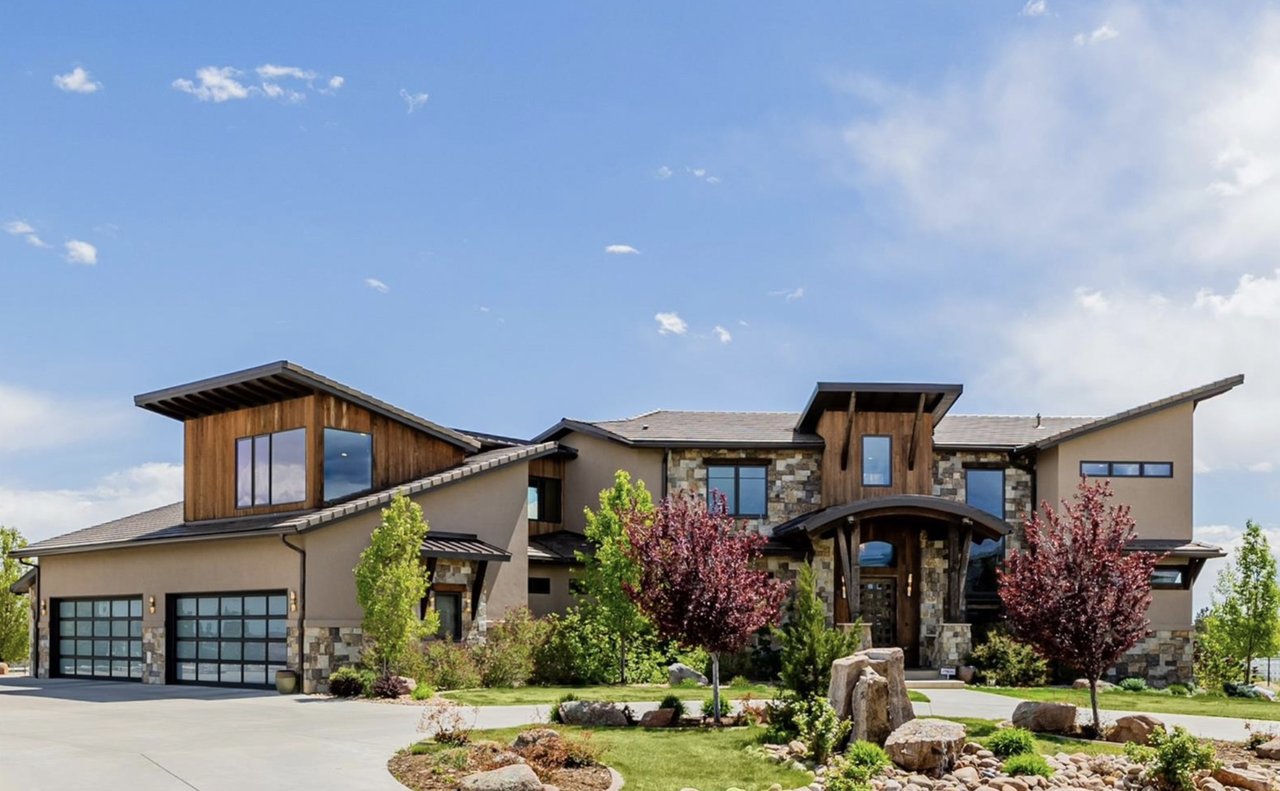
Contemporary stone-and-wood home with a two-car garage and landscaped front yard.
Living in Broomfield, Colorado
Broomfield offers one of the most practical and well rounded lifestyles on the Front Range. It blends master planned neighborhood living, major open space and trail access, strong regional connectivity, and a civic identity that is more distinctive than many people expect. For buyers, renters, and relocators, Broomfield stands out because it is not simply a suburb between Denver and Boulder. It has its own story, its own county government, and its own mix of parks, employment centers, and established residential areas.[1][2][3][4]
Why People Love Broomfield
Broomfield appeals to people who want balance. It has the convenience of a major metro location, but it also has a strong community identity, recreation infrastructure, and a cleaner civic narrative than many neighboring areas. The city and county website itself is organized around four ideas — Live, Work, Explore, Engage — which is a useful shorthand for how Broomfield functions in real life.[1] Broomfield is Colorado’s newest county. It officially became the City and County of Broomfield on November 15, 2001, after previously being spread across four different counties.[9]
One of Broomfield’s biggest differentiators is that it officially became the City and County of Broomfield in 2001, making it Colorado’s newest county.[3] That matters because it gives Broomfield a stronger local identity than a place that is simply split across larger counties.
Broomfield’s City and County Identity Makes It Different
Broomfield has a rare civic setup. According to the city’s official history, it was once the only city in Colorado lying in portions of four counties, which created confusion for services and governance. That led residents to support a constitutional amendment, and on November 15, 2001, the City and County of Broomfield officially took effect.[3]
Homes in Broomfield
Broomfield’s housing stock is best understood through its growth history. The city’s official history notes that Broomfield Heights began in 1955 and that today’s Broomfield was conceived as a master planned community billed as a model city.[3] That makes a big difference in how the housing feels across the city.
For a landing page, the most accurate “typical home” description is this: Broomfield is best known for detached single family living in planned neighborhoods, with additional townhomes, condos, and newer mixed residential options in later growth areas. The housing story is less about an old historic core full of vintage homes and more about well-established neighborhoods, postwar and later-era suburban development, and a citywide pattern shaped by planning and expansion.[3]
That is especially useful for people looking for a place with a more traditional neighborhood feel, but still wanting access to jobs, recreation, and regional transportation.
Architectural Character and Design Legacy
Broomfield’s design identity is not built around one marquee architect that I could verify from official sources. The stronger and more accurate story is that Broomfield’s character comes from railroad roots, mid-century master planning, civic facilities, and later mixed-use and employment-area growth.[3][5][6][8]
The city’s history shows this progression clearly: early railroad and farming settlement around 120th and Wadsworth, then Broomfield Heights and later neighborhoods, then Interlocken and FlatIron Crossing as major later-era growth centers.[3] That makes Broomfield feel more layered than a single-era suburb.
If there is a built landmark that best represents this identity, it is the Broomfield Depot Museum, which highlights the role of freight and passenger trains in shaping the community and connecting it to Denver, Boulder, and beyond.[5] For Broomfield, the strongest architecture section emphasizes community planning, transportation history, and adaptive civic identity, not one celebrity designer.
Open Space, Parks, and Trails Are a Major Part of the Lifestyle
Broomfield’s outdoor appeal is one of its biggest strengths. The city adopted a new Open Space, Parks, Recreation and Trails Plan in 2024, reinforcing how central open space and recreation are to the community’s future.[2]
The city’s open space materials highlight places like Metzger Farm Open Space, a 152 acre property jointly acquired by Westminster and Broomfield,[2] along with The Field, Markel Open Space, Wottge Open Space, and Plaster Reservoir.[2] These are not just leftover parcels. They are part of a broader system that shapes how Broomfield feels.
The Broomfield County Commons is another standout. Officially, the site spans 300 acres, including 237 acres of open space and an 80 acre park and sports complex, along with the Paul Derda Recreation Center.[6] That is the kind of specific, useful detail that strengthens both local SEO and the credibility of the page.
Arts, History, and Community Facilities Add Depth
Broomfield also has more cultural infrastructure than many people realize. The city maintains the Broomfield Depot Museum and the Broomfield Veterans Museum, giving the community a direct connection to local and civic history.[5][9]
There is also a visible investment in contemporary public art. The city’s Art in Public Places program includes initiatives such as its public concrete poetry project, centered on storytelling, community, belonging, and collective hope.[7] That gives Broomfield a more current cultural layer alongside its historic one.
The Broomfield Auditorium adds another useful lifestyle anchor. It is a 286 seat venue used for performances, recitals, and events, and sits next to the library with accessible seating and modern equipment.[8] That makes Broomfield more than a commuter base; it supports actual local cultural life.
Regional Access Is One of Broomfield’s Biggest Advantages
Broomfield’s location is one of its strongest selling points, but the page is better when it explains why. The city’s official transit page notes that Broomfield has several transit options, including US 36 Bus Rapid Transit, fixed route services on US 287 and 120th Avenue, FlexRide, Access-a-Ride, and Broomfield Easy Ride.[4]
That makes Broomfield especially appealing for people who want practical connections to Denver, Boulder, and nearby job centers.
Work Hubs and Everyday Convenience
Broomfield’s official history also points to the growth of Interlocken as the city’s premier employment center and notes the development of FlatIron Crossing as a major retail and mixed-use milestone.[3] Those details matter because they help explain why Broomfield works so well for people who want neighborhood living without giving up access to jobs, shopping, and everyday services.
The Overall Lifestyle in Broomfield
Living in Broomfield often appeals to people who want a Colorado lifestyle that feels efficient, connected, and community oriented. The city offers well planned neighborhoods, open space, strong parks and recreation, civic history, arts and culture, and practical transit connections — all within a location that works well between Denver and Boulder.[1][2][3][4][5][6][7][8][9]
It is a city where a day can include neighborhood routines, a trail or open space walk, a short trip to a major employment center, and a local performance or community event without the experience feeling spread out or disconnected.
FAQs
What is Broomfield, Colorado known for?
Broomfield is known for being a combined city and county, its strong open-space and trail system, planned neighborhoods, regional access, and major employment areas like Interlocken.[2][3][4]
What types of homes are common in Broomfield, Colorado?
Broomfield is best known for detached single family homes in planned neighborhoods, with additional townhomes, condos, and newer mixed residential options across the city.[3]
Is Broomfield a city or a county?
It is both. Broomfield officially became the City and County of Broomfield on November 15, 2001.[3]
Does Broomfield have good outdoor access?
Yes. Broomfield has a major network of parks, open space, and trails, supported by its 2024 Open Space, Parks, Recreation and Trails Plan and places like County Commons and Metzger Farm.[2][6]
Is Broomfield well connected for commuting?
Yes. Broomfield has official transit options including US 36 Bus Rapid Transit, routes on US 287 and 120th Avenue, FlexRide, and other mobility services.[4]
Sources
[1] City and County of Broomfield. Official website. https://www.broomfield.org
[2] City and County of Broomfield. Open Space Plans and Statistics. https://www.broomfield.org/1111/Open-Space-Plans-and-Statistics
[3] City and County of Broomfield. History of Broomfield. https://www.broomfield.org/386/History-of-Broomfield
[4] City and County of Broomfield. Transit Options. https://www.broomfield.org/3261/Transit-Options
[5] City and County of Broomfield. Broomfield Depot Museum. https://www.broomfield.org/3515/Broomfield-Depot-Museum
[6] City and County of Broomfield. Broomfield County Commons. https://www.broomfield.org/facilities.aspx?page=detail&RID=9
[7] City and County of Broomfield. Art in Public Places. https://www.broomfield.org/3507/Art-in-Public-Places
[8] City and County of Broomfield. About the Auditorium. https://www.broomfield.org/243/About-the-Auditorium
[9] City and County of Broomfield. Museums. https://www.broomfield.org/119/Museums
R Squared Realty Experts fully supports the principles of the Fair Housing Act and all applicable federal, Colorado, and local fair housing laws. We provide equal professional service to all clients and customers. Our neighborhood and city pages are intended to describe objective features of a location — such as housing stock, parks, trails, transportation, architecture, and community amenities — and are not intended to express a preference, limitation, or bias regarding any person or group.

Search Homes

WHO YOU WORK WITH MATTERS

Contact us to provide an experience unlike others and help you take the stress out of buying and selling your home in the Denver and surrounding area today!